
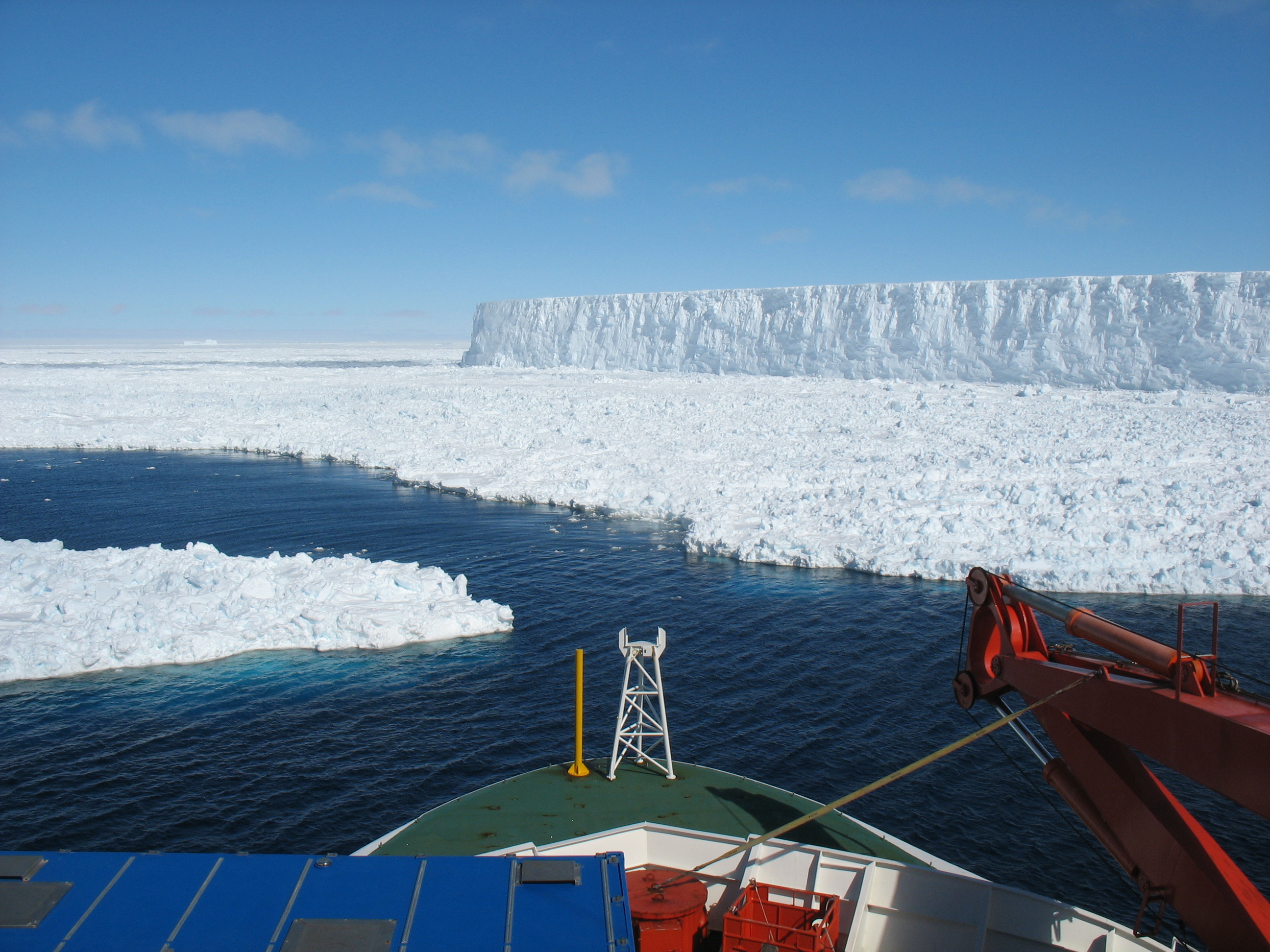
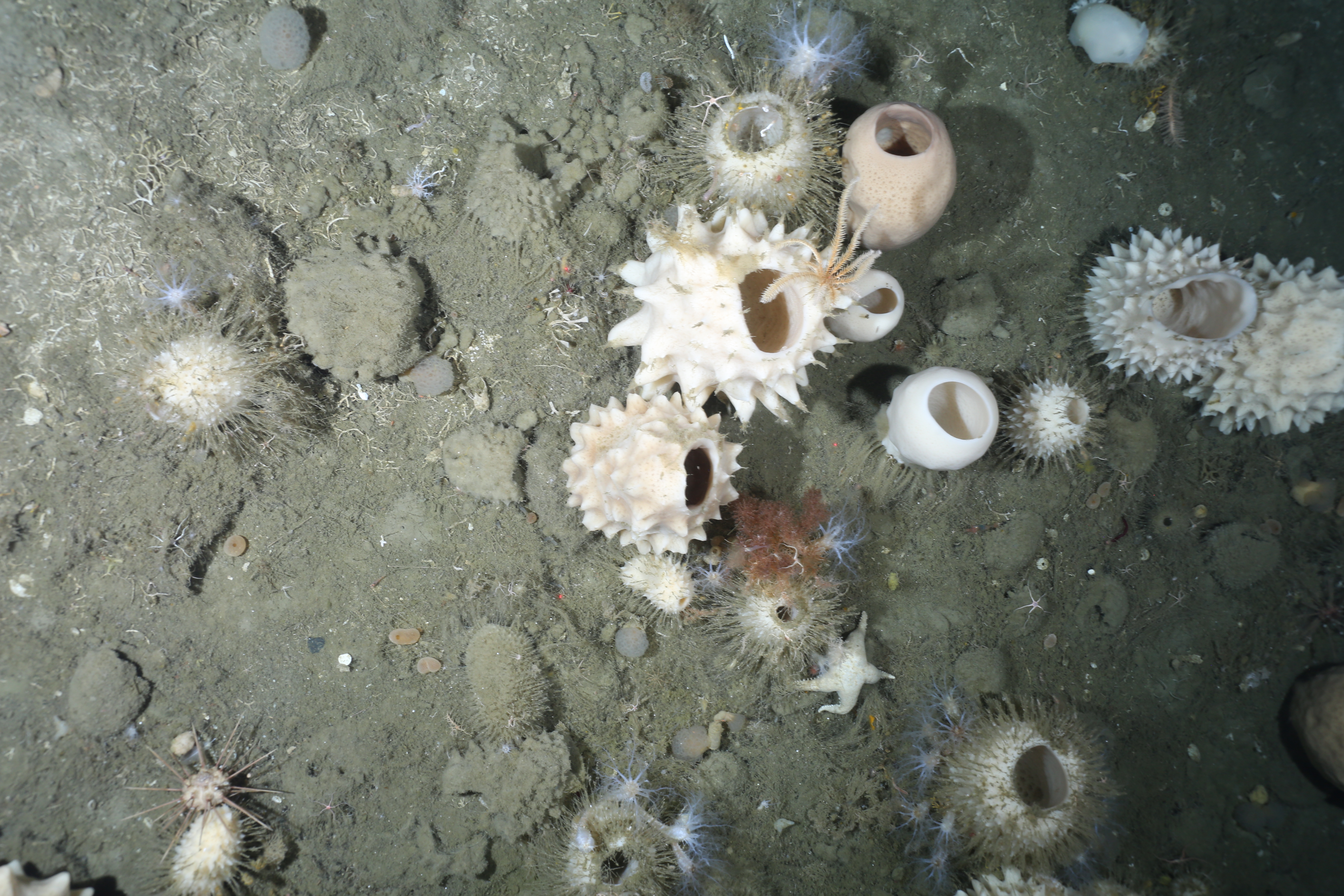
The aim of the expedition is to lay the foundation for long-term observations of biodiversity in a possible future marine protected area. The research voyage will take place from December 15, 2025, to February 2, 2026, and marks the fieldwork phase of the EU joint project “Weddell Sea Observatory of Biodiversity and Ecosystem Change” (WOBEC), which is supported by eleven partner institutions and national funders from Europe and the USA under the umbrella of the European Partnership for Biodiversity Biodiversa+. The expedition will also supply the German Antarctic station Neumayer III, which is maintained by the Alfred Wegener Institute (AWI).
Setting off for one of the last largely untouched ecosystems on Earth
Under the scientific direction of Dr. Heike Link from the University of Rostock, the 46-member team will carry out research along the Prime Meridian and in the eastern Weddell Sea over the coming weeks. On board the research vessel operated by the Alfred Wegener Institute, Helmholtz Centre for Polar and Marine Research (AWI), the researchers plan to conduct investigations around the seamount Maud Rise where unique current conditions result in a highly productive and biodiverse community, and continue earlier work on the species-rich communities on the shelf region off Kapp Norvegia, west of the German Antarctic station Neumayer III. Both modern autonomous observation systems and classic oceanographic measurement methods will be used. “We want to understand how this unique ecosystem is developing and what effects the decline in Antarctic sea ice is having on the communities,” says expedition leader and marine ecologist at the University of Rostock, Heike Link. “The expedition is a crucial test for our joint observation concept, which we are setting up for the coming years.”
International joint project for Antarctic biodiversity
The EU project WOBEC is coordinated by the AWI and investigates how biodiversity and ecosystem functions are changing in this ice-rich region. The Weddell Sea is a biodiversity hotspot: it is home to sponge and coral gardens, as well as huge swarms of krill. The area is also a habitat for bottom-dwelling fish, whales, and ice-dependent organisms, including Weddell seals and emperor penguins. “The Weddell Sea is one of the last largely untouched marine areas on our planet. It serves as a refuge for many cold-loving species in times of man-made climate change,” explains Dr. Hauke Flores, marine biologist at the AWI and coordinator of WOBEC. “With WOBEC, we are laying the foundation for early detection of changes and the development of effective protection strategies for a potential marine protected area.”
Data for tomorrow – knowledge for protecting the Southern Ocean
During the expedition, scientists will collect new biological, chemical, and physical data and also make historical data sets available to the general public. This is based on close cooperation with international partners and the Commission for the Conservation of Antarctic Marine Living Resources (CCAMLR).
With the Polarstern setting sail today, WOBEC's fieldwork begins – an important step towards a better understanding of one of the most sensitive and valuable ecosystems on Earth.
The German research icebreaker Polarstern
The Polarstern is one of the most important research icebreakers in the world. Since it entered service in 1982, it has spent an average of 305 days a year in the Arctic and Antarctic and has covered around 1.9 million nautical miles for science. In addition to up to 45 crew members, there is room for around 50 scientists on board to conduct their research in the polar regions. Technicians, pilots, and engineers are also part of the ship's crew. In addition, Polarstern supplies the German Neumayer III research station in Antarctica (as it does during the PS152 expedition).
Further information on the WOBEC project
https://wobec.aq
Information for the media
You can also find the latest information about the expedition in the Polarstern app https://follow-polarstern.awi.de/ as well as on the University of Rostock's Instagram channel @unirostock
Media contact
University of Rostock (press department):
Dr. Kirstin Werner
Tel.: +49 (0)381 489 1013
E-Mail: kirstin.werneruni-rostockde
Inquiries FS Polarstern
Alfred Wegener Institute (Communications and Media Relations):
Dr. Folke Mehrtens
Tel.: 0471 481-2007
E-Mail: Folke.Mehrtensawide
University of Rostock
Since 1419, the University of Rostock, the oldest and most traditional university in the Baltic Sea region, has had its sights set on the future. Our strength lies in the interdisciplinary interaction between the various academic cultures of our nine faculties. The great diversity of our future-oriented degree programs offers a wide range of study options. One special feature is the Interdisciplinary Faculty. As a central scientific institution, it brings together researchers and students from all disciplines to solve pressing contemporary issues in the fields of “Life, Light and Matter,” “Maritime Systems,” “Aging of the Individual and Society,” and “Knowledge – Culture – Transformation.”
Follow the University of Rostock on Instagram: @unirostock and LinkedIn @Universität Rostock
Alfred Wegener Institute for Polar and Marine Research
The Alfred Wegener Institute, Helmholtz Centre for Polar and Marine Research (AWI) conducts research in the Arctic, Antarctic, and the oceans of temperate and high latitudes. It coordinates polar research in Germany and provides important infrastructure such as the research icebreaker Polarstern and stations in the Arctic and Antarctic for international science. The Alfred Wegener Institute is one of 18 research centers of the Helmholtz Association, Germany's largest scientific organization.
Follow the Alfred Wegener Institute on Instagram: @awiexpedition, LinkedIn: @Alfred-Wegener-Institut, Helmholtz-Zentrum für Polar- und Meeresforschung, Bluesky: @awi.de, Mastodon: @awi@helmholtz.social.de, Facebook: @AlfredWegenerInstitut und Youtube: @AWIresearch.